
.png)
.png)
Key Takeaways
- Choosing GEO tools starts with what your team needs, from AI visibility tracking and content workflows to outreach.
- Peec and Otterly focus on AI visibility tracking, while Profound and Scrunch offer advanced reporting or agent-focused capabilities.
- AirOps and Writesonic automate content workflows, while Semrush and Ahrefs offer AI visibility alongside traditional SEO research.
- Similarweb supports market research, GA4 measures referral traffic, and ChatGPT and Claude help automate recurring GEO work.
- Apollo helps find publisher contacts for outreach, but compare model coverage, prompt limits, and add-on costs before subscribing.
Generative engine optimization (GEO) tools help businesses understand how their brands appear in AI-generated answers,identify opportunities to improve that visibility, and help you execute the opportunities.
As more people use ChatGPT, Gemini, Perplexity, and other AI platforms to research software, SaaS companies need to understand whether their products are being recommended, which competitors appear instead, and which websites influence those recommendations.
There are now several tools built specifically for this purpose.
- Some tools focus on tracking AI visibility
- While others help with content operations, research, or measuring traffic from LLMs.
- Established SEO platforms such as Semrush and Ahrefs have also introduced AI visibility features.
However, businesses don't necessarily need every category of tool. The right combination depends on what their marketing team wants to accomplish.
In this article, we have selected 13 GEO tools across six categories, covering their features, pricing, advantages, and limitations, with a focus on how B2B SaaS marketing teams can use them.
Quick comparison of the 13 best GEO tools in 2026
What are GEO tools?
GEO tools are software platforms that help businesses monitor, measure, and improve their visibility in AI-generated answers.
For example, when a potential customer asks ChatGPT to recommend a CRM for a small B2B sales team, the response may include several software products and sources supporting those recommendations.
A GEO tracking tool can help a CRM vendor understand:
- Whether its product appears in the answer
- Which competitors are recommended more frequently
- Which websites and pages are cited.
- How the AI platform describes its product.
- Whether its visibility changes over time.
This gives marketing teams information they cannot obtain from traditional keyword-ranking reports alone.
However, GEO involves more than monitoring AI recommendations.
Businesses also need to research the platforms influencing their buyers, improve existing website content, measure traffic from AI sources, and identify websites where their products should be mentioned.
For that reason, we've included both dedicated GEO platforms and supporting tools in this list.
How we have evaluated these GEO tools
We selected these 13 tools based on the work B2B SaaS marketing teams need to perform, rather than simply comparing the number of features each platform offers.
Our evaluation considered:
- Core capabilities and actual workflows: We examined what each tool helps users accomplish, from tracking AI visibility and researching citations to creating content, measuring traffic, and managing outreach.
- AI platform coverage: For visibility trackers, we compared supported platforms such as ChatGPT, Gemini, Perplexity, Claude, and Google AI Mode, including differences between plans.
- Data and reporting: We looked at competitor analysis, brand mentions, sentiment, citation sources, prompt tracking, and whether the available information helps teams decide what to improve.
- Pricing and usage limits: We reviewed published pricing, prompt allowances, model coverage, credits, add-ons, and the potential cost of expanding usage.
- Ease of use and integrations: We considered how easily teams can work with the platform and whether it connects with existing SEO tools, analytics platforms, or content management systems.
- Public reviews and discussions: We examined feedback from G2, Capterra, and relevant Reddit discussions to understand users' reported experiences, including limitations that may not be obvious from product websites.
We also considered whether a tool is useful specifically for B2B SaaS businesses. A platform may have extensive capabilities, but that does not necessarily make it the right choice for a smaller marketing team.
Our product assessments combine published documentation, public feedback, and the stated requirements of GEO workflows. We have not independently benchmarked every platform under identical conditions, so comments about performance should be treated as directional assessments rather than controlled test results.
In-Depth Analysis of the 13 Best GEO tools in 2026
AI visibility monitoring and tracking tools
These tools help businesses monitor how their brands appear in AI-generated answers, compare competitors, understand brand perception, and identify opportunities to improve visibility.
1. Peec AI: For businesses that want a simple AI visibility platform\
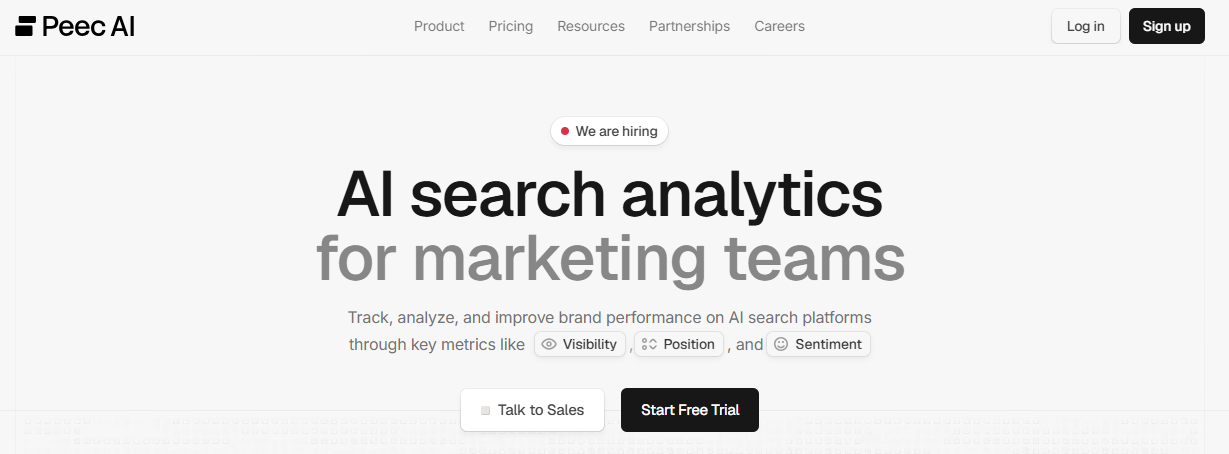
Peec AI is an AI search analytics tool that helps you understand where your brand appears in AI answers and how it compares with competitors. Its main features cover AI visibility tracking, brand perception, and agent analytics.
You can track brand mentions, compare your share of voice with competitors, and analyze how AI platforms describe your business. This helps you understand both your visibility and whether LLMs reflect your product's positioning.
What we like most about Peec is how straightforward the platform is to use. The interface is clean and minimal, and the main features are easy to find.
For teams that want to monitor AI visibility without spending too much time learning the platform, Peec is worth considering.
Key features
- Competitor visibility tracking: Identify prompts and topics where competing products appear more frequently than yours.
- Brand perception analysis: Understand the attributes AI associates with your product and whether those descriptions match your positioning.
- Citation analysis: Find websites mentioning competitors but leaving out your brand, giving your team sources to investigate.
- Agent analytics: Examine which AI bots visit your website, which pages they access, and whether they encounter errors.
Pricing
Peec offers separate pricing for brands and agencies.
Brand pricing
All three standard plans support daily tracking. The higher plans increase project and reporting allowances.
Businesses needing additional models can purchase add-ons. Enterprise provides custom tracking capacity and access to a wider selection of models.
Agency pricing
Agency credits represent tracking allocation units. One prompt tracked on one model for one day requires one credit.
For example, tracking one prompt daily across three models for 30 days requires 90 credits. The estimates above use that calculation.
Agencies can distribute credits across client projects and adjust their tracking configurations.
Source: Peec brand pricing and agency pricing.
Pros
- Clean interface that makes AI visibility and competitor reporting easy to understand.
- Useful citation data for identifying content gaps and potential outreach opportunities.
- Flexible agency plans for allocating tracking capacity across client projects.
Cons
- Standard brand plans limit tracking to three selected AI models.
- Advanced tracking requirements and additional models increase subscription costs.
- The platform focuses more on measurement than providing detailed content optimization recommendations.
For a detailed review of Peec AI: check this Peec AI reviews on G2.
2. Profound: For enterprises that don't care about pricing
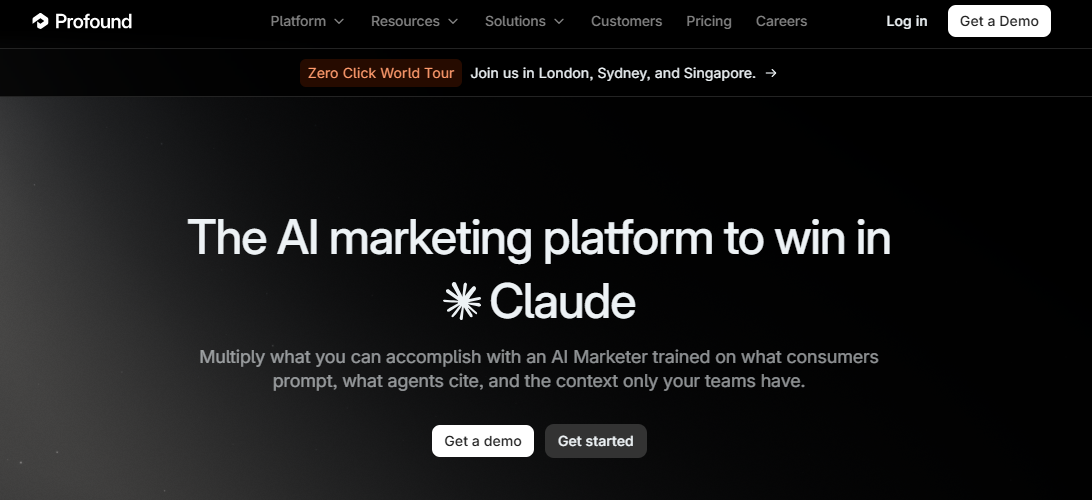
Profound is one of the earlier platforms focused specifically on AI search visibility. It helps businesses understand how their brands appear across AI answer engines, which competitors are being recommended, and which sources influence those responses.
Over time, Profound has expanded beyond visibility tracking. The platform now combines AI search analytics with prompt research, agent analytics, content workflows, and automated marketing agents.
This broader functionality is useful for enterprises managing several products, markets, or marketing teams.
However, the number of features also creates a trade-off. A typical small or mid-market B2B SaaS company may only need visibility monitoring, citation analysis, and competitor reporting. Profound offers considerably more, which can increase the time needed to understand and operate the platform.
It is best suited for enterprises that need detailed reporting and have the resources to make use of its broader capabilities. Also the pricing is also in the range that is suitable for enterprise companies rather than midmarket or startups.
Key features
- Answer Engine Insights: Monitor brand mentions, citations, sentiment, and competitor visibility across AI platforms.
- Prompt Volumes: Research questions users ask AI platforms and understand potential demand.
- Agent Analytics: Examine AI-related website activity and attribution information.
- Competitive research: Compare brand visibility and identify changes across AI search platforms.
- Marketing agents: Automate selected research, content creation, and optimization workflows.
Pricing
Profound currently publishes Starter, Growth, and Enterprise plans for brands.
- The Starter plan is primarily intended for businesses beginning AI visibility monitoring.
- Growth adds broader platform coverage, content workflows, and additional agent usage.
- Enterprise provides customized prompt tracking, integrations, expanded model coverage, and dedicated support.
Profound also offers an Agency Growth plan. Its documentation confirms 400 agent credits per month per client workspace, but the current agency subscription price should be confirmed directly.
Agent credits are consumed when automated workflows run. More complicated workflows require more credits.
Source: Profound pricing.
Pros
- Detailed AI visibility reporting across multiple answer engines.
- Combines research, competitor analysis, and automated marketing workflows.
- Suitable for enterprises managing complex reporting requirements.
Cons
- The number of features can create a longer learning curve.
- Smaller businesses may not need the broader automation and reporting capabilities.
- Expanded model coverage and agent usage can increase costs considerably.
Source: Profound reviews on G2.
3. Scrunch: For businesses exploring content delivery for AI agents
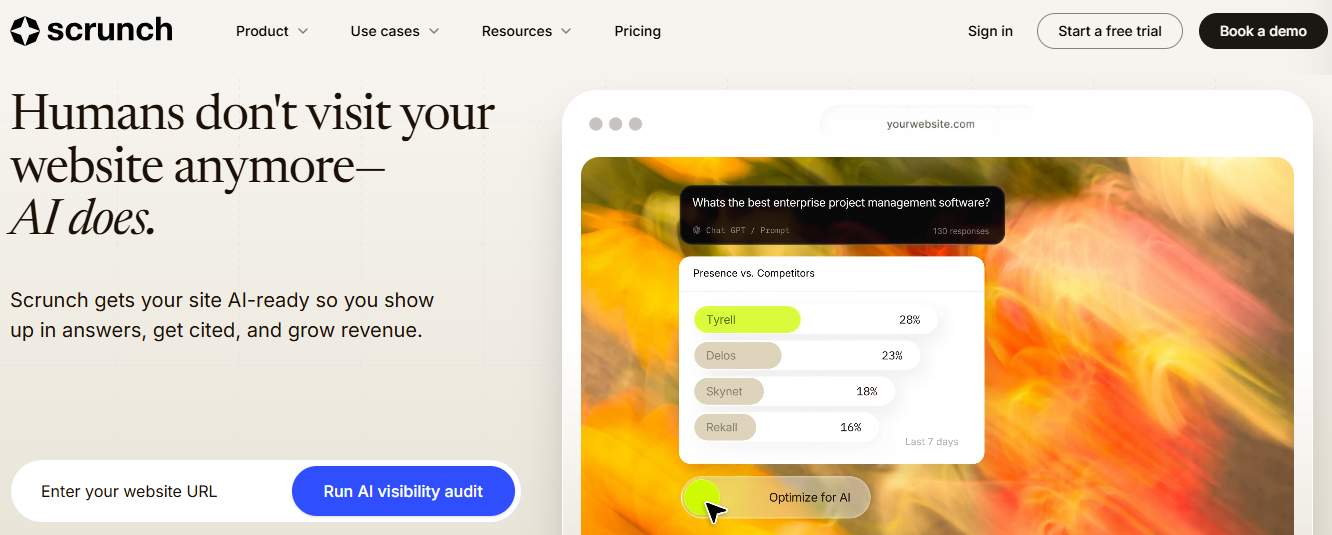
Scrunch is an AI visibility platform that helps businesses monitor brand mentions, citations, and competitor performance across AI-generated answers.
However, the primary reason we've included Scrunch is its approach to optimizing website content for AI agents. Its Agent Experience Platform (AXP) includes a feature called Agent Pages, which focuses on how AI agents access and understand website information.
Scrunch claims it can detect AI agent traffic and deliver simplified, optimized content while leaving the human-facing website unchanged. This makes Scrunch different from platforms focused mainly on tracking mentions and citations.
However, there is still limited independent research establishing how consistently agent-specific content delivery improves AI citations across different websites. Scrunch has published customer case studies reporting improvements, but businesses should evaluate the feature and its implementation requirements before assuming similar results.
Key features
- AI visibility monitoring: Track brand mentions, citations, sentiment, and competitor performance.
- Agent traffic analytics: Understand how AI bots access your website.
- Website auditing: Identify technical and content issues affecting AI-agent access.
- Agent Pages: Deliver simplified, AI-optimized website content to supported agents.
- Citation research: Identify pages and domains frequently referenced in relevant AI answers.
Pricing
Scrunch offers separate packages for brands and agencies.
- The Core plan tracks ChatGPT, Perplexity, Google AI Overviews, and Microsoft Copilot. It also includes five site audits per month, one brand workspace, and five user licenses.
- Enterprise expands the tracking capabilities and includes Scrunch's Agent Experience Platform.
- Businesses specifically interested in Agent Pages should therefore investigate Enterprise pricing rather than evaluating the Core plan alone.
A seven-day Core trial is available.
Source: Scrunch pricing.
Pros
- Combines AI visibility tracking with website and agent traffic analytics.
- Agent Pages provides a different approach to making existing content accessible to AI agents.
- Citation and technical data can help businesses identify website improvement opportunities.
Cons
- Agent Experience Platform functionality requires an Enterprise agreement.
- Some integrations and agent analytics configurations may require technical assistance.
- Independent evidence connecting agent-specific content delivery with sustained citation improvements remains limited.
Source: Scrunch reviews on G2.
4. OtterlyAI: For businesses starting GEO with a smaller budget
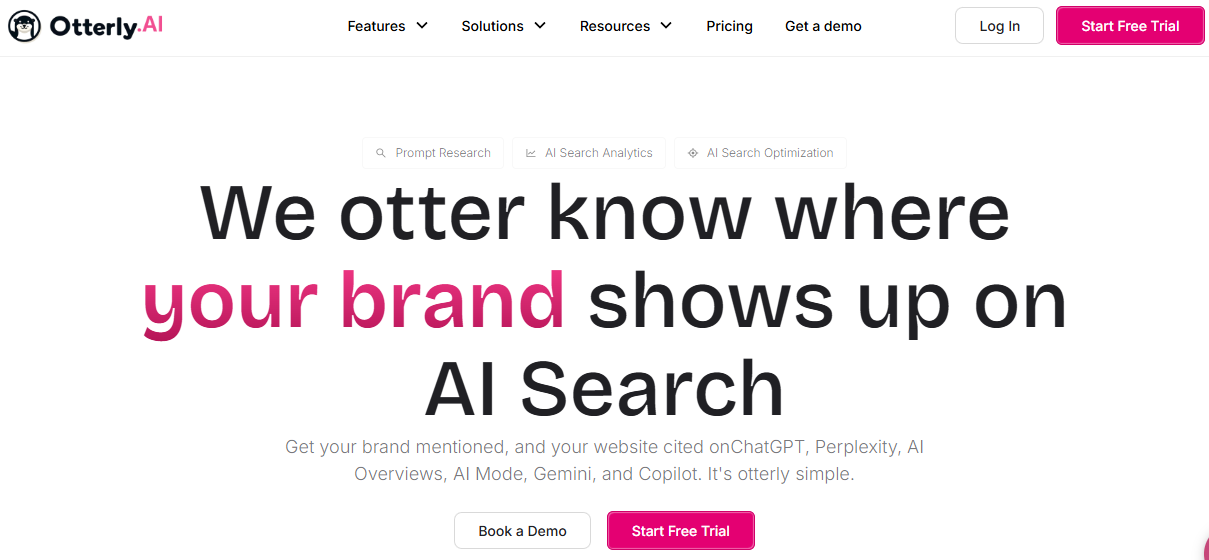
OtterlyAI is an AI search monitoring platform that helps businesses track brand visibility, citations, and competitors across AI-generated answers.
Its main advantage is the lower starting price. For B2B SaaS companies beginning to explore GEO, Otterly provides a way to start tracking selected prompts without committing to a more expensive platform.
The Lite plan costs $29 per month and includes 15 prompts.
While 15 prompts will not provide extensive coverage of a competitive software category, the allowance can help teams understand the tool and identify initial visibility patterns.
As tracking requirements increase, businesses can move to higher plans. However, additional model coverage and prompt capacity can raise the total monthly cost.
Key features
- AI visibility monitoring: Track brand mentions and recommendations for selected prompts.
- Competitor tracking: Compare your brand's visibility against competing products.
- Citation analysis: Identify websites and URLs referenced in AI responses.
- GEO auditing: Review potential website optimization opportunities.
- Reporting and integrations: Export findings and connect supported workflows, depending on the plan.
Pricing
Otterly publishes three standard monthly plans.
The standard plans include four AI search platforms:
- ChatGPT
- Google AI Overviews
- Perplexity
- Microsoft Copilot
Claude, Gemini, and Google AI Mode require additional payments.
Monthly add-on pricing
For example, a business on the Lite plan that wants to add Gemini and Claude would pay $67 per month instead of $29.
Teams should calculate costs based on the prompts and AI platforms they actually need to monitor.
Source: OtterlyAI pricing.
Pros
- Low starting price makes it accessible to smaller marketing teams.
- Straightforward visibility, competitor, and citation tracking.
- Businesses can start with a limited set of prompts before expanding.
Cons
- The Lite plan's 15-prompt allowance provides limited tracking coverage.
- Gemini, Claude, and Google AI Mode require paid add-ons.
- Total costs increase when businesses need more prompts and broader model coverage.
Source: OtterlyAI reviews on G2.
Content workflow tools
Content workflow tools focus on creating and updating website content through automated workflows.
We prefer research-led content development with meaningful human involvement rather than relying heavily on automated content production.
However, some businesses use AI-assisted content workflows successfully. For teams specifically looking to automate content operations, AirOps and Writesonic are worth evaluating.
5. AirOps: For businesses automating content creation and updates at scale
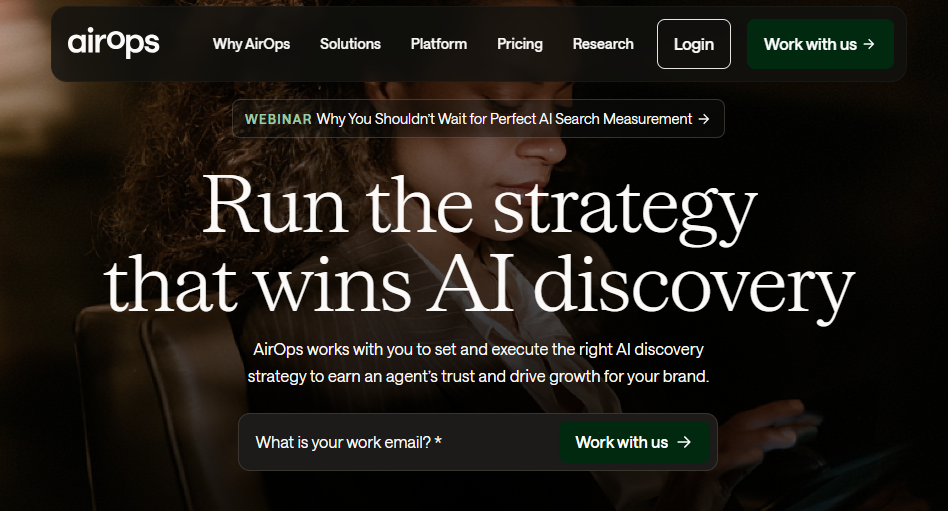
AirOps is a content workflow platform that helps marketing teams automate research, content creation, and optimization activities.
They position their product around helping businesses execute strategies that improve AI discovery. While that positioning can feel broad, the main purpose of the platform is straightforward: connecting data sources, AI models, and publishing systems through automated workflows.
For example, businesses can use information from Google Search Console, Google Analytics, and supported SEO tools to identify content opportunities. They can then use workflows to create new pages or update existing website content.
AirOps also supports connections with CMS platforms and external services.
We don't generally prefer producing or optimizing content entirely through AI. However, for companies specifically looking to automate content operations at scale, AirOps is one of the strongest options in this list based on its workflow focus and integration capabilities.
Key features
- Workflow builder: Create repeatable processes for research, content production, and updates.
- SEO and analytics integrations: Use information from Google Search Console, analytics platforms, and supported SEO services.
- AI model connections: Incorporate LLMs into content workflows.
- CMS integrations: Connect publishing systems to content creation and update workflows.
- Content refresh automation: Identify and update existing website pages at scale.
Pricing
AirOps offers Solo, Pro, and Enterprise plans.
The public pricing page focuses on the usage allowances included in each package rather than consistently displaying fixed paid-plan prices.
- Solo is designed for individuals working on one brand or project.
- Pro supports larger content operations, broader AI search insights, and additional integrations.
- Enterprise includes customized workflows and higher usage limits.
AirOps measures content workflow usage through tasks. Businesses should confirm how many tasks their planned workflows consume and whether additional usage charges apply.
Source: AirOps pricing.
Pros
- Useful for automating repetitive content research and production activities.
- Connects AI models, SEO data sources, and publishing workflows.
- Supports updating existing content at scale rather than focusing only on new articles.
Cons
- Advanced workflows require time to configure, test, and maintain.
- AI-produced content still requires editorial review and subject-matter expertise.
- Task-based usage and complex workflows can make total costs harder to estimate.
Source: AirOps reviews on G2.
6. Writesonic: For businesses combining content workflows with AI search insights
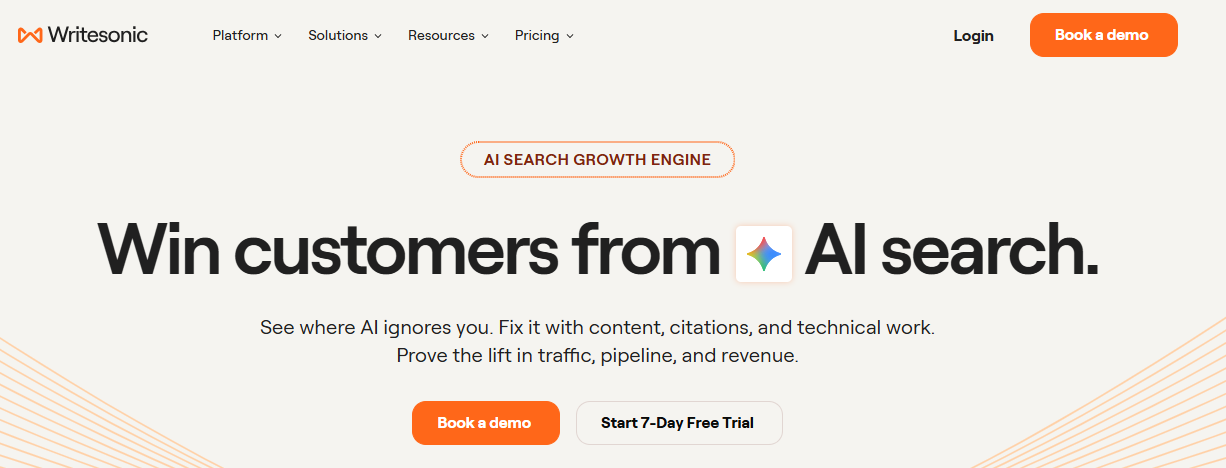
Writesonic started primarily as an AI content creation platform. It has since expanded into AI search visibility and now positions itself as an AI search growth platform.
The product combines visibility monitoring, competitor research, content creation, and workflows designed to help businesses act on their findings.
Although Writesonic now offers several AI search features, we still consider content production one of its strongest capabilities.
Its approach overlaps with AirOps. A business can identify content gaps through AI visibility research and use those findings to create new pages or improve existing content.
Key features
- AI visibility tracking: Monitor brand performance across supported AI search platforms.
- Competitor and citation research: Identify content opportunities from competing brands and referenced sources.
- AI content generation: Produce articles and supporting content using AI-assisted workflows.
- Content optimization: Improve existing pages based on research and audit findings.
- Workflow automation: Use AI agents and connected services to perform selected content tasks.
Pricing
Writesonic publishes three standard plans and an Enterprise option.
- Starter includes AI visibility tracking, AI-generated articles, and website audits.
- Basic increases tracking and content allowances.
- Growth adds more advanced research and reporting capabilities.
- Enterprise offers expanded AI platform coverage, custom allowances, and broader workflow automation.
Businesses should confirm content generation limits and agent usage requirements before selecting a plan.
Source: Writesonic pricing.
Pros
- Combines AI visibility insights with content creation tools.
- Helps teams move from identifying content gaps to producing or updating pages.
- Provides published entry pricing and defined tracking allowances.
Cons
- AI-generated content requires fact-checking and editorial review.
- Broader AI platform coverage and advanced workflows may require higher plans.
- The number of features can make the platform harder to evaluate for teams needing only content automation.
Source: Writesonic reviews on G2.
GEO features in existing SEO platforms
Semrush and Ahrefs are already part of many SEO teams' software stacks.
With both platforms introducing AI visibility features, businesses can consider expanding their existing subscriptions instead of purchasing another dedicated GEO tool.
The decision depends on the additional cost and whether the team prefers working within one platform.
7. Semrush: For existing users who want AI visibility tracking in the same platform
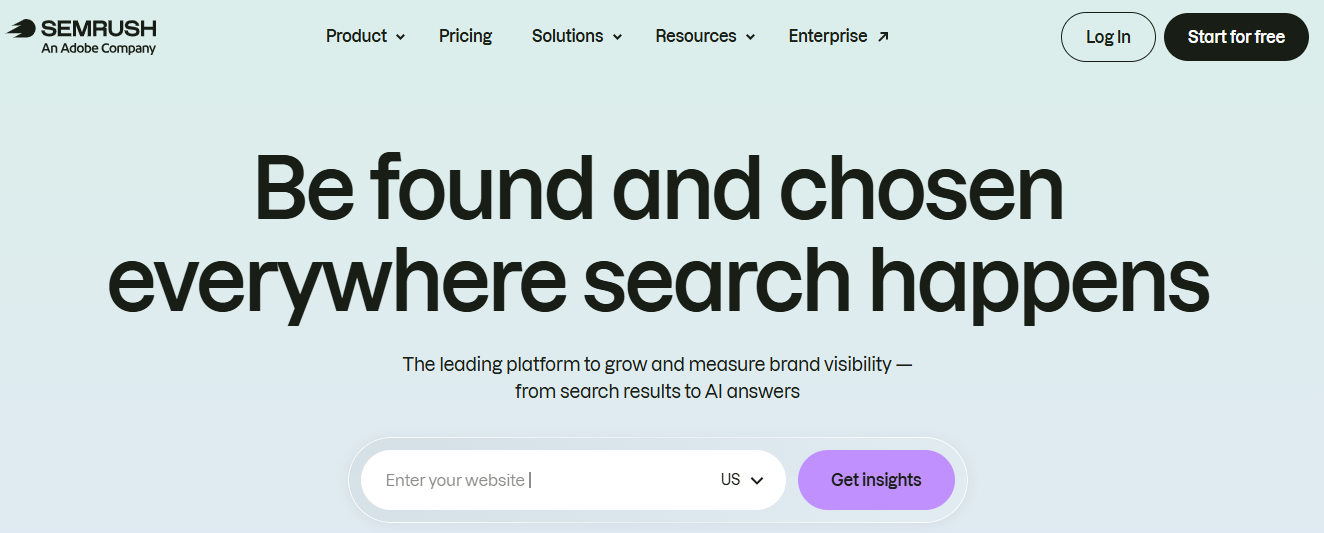
Semrush is an established SEO platform used for keyword research, competitor analysis, technical auditing, rank tracking, and content research. It has also introduced AI visibility capabilities that help businesses understand how their brands appear in AI-generated answers and also to stay updated with the changes that are happening.
For businesses already using Semrush, this provides an opportunity to add AI visibility research without introducing another software platform.
However, these capabilities come with their own pricing. Businesses may need to add an AI Visibility subscription alongside their existing SEO tools.
Key features
- AI visibility monitoring: Track how frequently your brand appears across supported AI platforms.
- Custom prompt tracking: Monitor questions relevant to your products and customers.
- Competitor analysis: Compare your AI visibility with competing businesses.
- Prompt research: Research questions and topics relevant to AI-generated recommendations.
- AI readiness audits: Identify technical website issues that may affect AI search accessibility.
Pricing
Semrush offers AI visibility features through a separate AI Visibility subscription.
The Base package includes:
- 25 custom prompts tracked daily.
- AI visibility reports for supported platforms.
- One domain for Brand Performance analysis.
- Competitor analysis and prompt research.
- AI readiness checks through Site Audit.
Supported reporting includes ChatGPT, Google AI, Gemini, and Perplexity.
The AI Visibility subscription may be added to an existing Semrush account. Traditional SEO subscriptions have separate costs.
Source: Semrush AI Visibility pricing.
Pros
- Familiar platform for businesses already using Semrush.
- Combines traditional SEO research with AI visibility reporting.
- Offers competitor analysis and prompt research alongside tracking.
Cons
- AI visibility features add another subscription expense.
- The base allowance of 25 custom prompts may be insufficient for larger software categories.
- The number of features and reports can create a learning curve for new users.
Sources: Semrush on G2 and Capterra.
8. Ahrefs Brand Radar: For existing users who want AI visibility data alongside SEO research
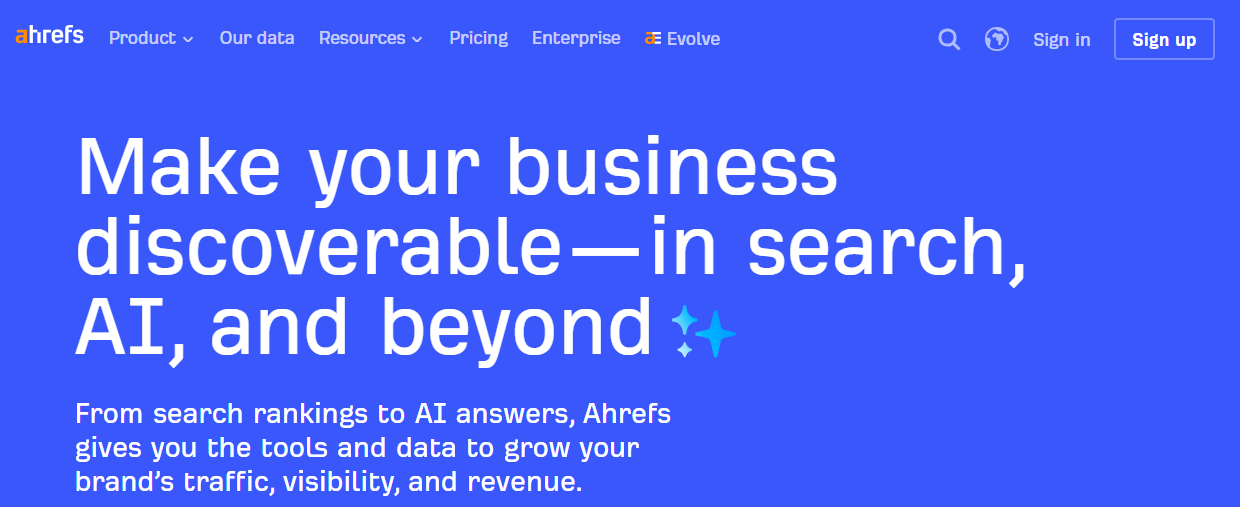
Ahrefs is another established SEO platform, particularly known for SEO analysis, keyword research, competitor analysis, and technical website auditing.
Its Brand Radar product extends the platform into AI search visibility. Businesses can examine how frequently their brands appear in AI-generated answers, identify cited sources, and compare performance against competitors.
One interesting part of Brand Radar is the combination of large-scale AI visibility data and custom prompt tracking.
This allows businesses to research broader visibility patterns while also monitoring specific questions relevant to their products.
Key features
- AI visibility analysis: Monitor brand mentions and citations across supported AI platforms.
- Competitor tracking: Compare visibility against competing products.
- Custom prompt monitoring: Track questions relevant to specific products and software categories.
- Citation research: Identify domains and pages appearing in AI-generated answers.
- SEO research integration: Combine AI visibility findings with existing Ahrefs SEO data.
Pricing
Ahrefs offers custom prompt tracking and large-scale AI visibility indexes.
Custom prompt tracking
Tracking one prompt on one platform in one location normally consumes one check.
Some platforms consume more checks. For example, Ahrefs states that Claude consumes eight checks per update.
Overage rates depend on the package.
AI Visibility Index
Paid Ahrefs SEO subscriptions also include limited custom prompt tracking.
For example, Lite includes five prompts, Standard includes ten, and Advanced includes twenty daily tracked prompts under their standard allowances.
Businesses should compare the cost of upgrading their Ahrefs subscription with purchasing additional prompt packages.
Source: Ahrefs Brand Radar pricing.
Pros
- Combines established SEO research with AI visibility analysis.
- Supports custom prompt tracking for specific software categories.
- Provides citation data for identifying content and competitor opportunities.
Cons
- Large-scale AI visibility indexes can become expensive.
- Model-specific check consumption requires careful usage planning.
- Businesses needing only basic GEO tracking may not use the broader Ahrefs platform enough to justify the cost.
Source: Ahrefs reviews on G2.
Research and measurement tools
The next two tools support different parts of GEO research.
Similarweb helps businesses understand their market and competitors using external data. Google Analytics 4 helps them measure identifiable website visits arriving from AI platforms.
9. Similarweb: For businesses building GEO strategies around their own research
Similarweb is a digital intelligence platform that provides information about website traffic, competitors, search demand, and market activity.
We've included it because GEO strategies should be based on an understanding of the market rather than simply following trends or advice circulating online.
For example, a B2B SaaS company can study competing websites, compare traffic sources, research search opportunities, and examine AI-related discovery through the appropriate packages.
Similarweb has also introduced AEO intelligence features covering AI brand visibility, citations, sentiment, and AI traffic.
However, we don't consider Similarweb essential for every GEO team. Its value depends on how much independent research a business conducts and whether that research influences marketing decisions.
Key features
- Competitor intelligence: Compare traffic and marketing activity across competing websites.
- Market research: Examine category-level trends and changes in digital activity.
- SEO research: Study keywords, search performance, and competitive opportunities.
- AI search intelligence: Analyze brand visibility, citations, sentiment, and AI-related traffic through AEO packages.
- Traffic analysis: Examine traffic channels, audience behavior, and market-level patterns.
Pricing
Similarweb provides separate packages for competitive intelligence, SEO, and AEO research.
The combined SEO and AEO package includes:
- AI brand visibility analysis.
- 150 tracked prompts.
- Sentiment and citation analysis.
- AI-related traffic reporting.
- SEO keyword and competitor research.
Businesses focused mainly on AI search should compare these packages with Similarweb's dedicated AI Search Intelligence offerings.
Source: Similarweb pricing.
Pros
- Useful for independent market and competitor research.
- Combines traditional search data with AI-related discovery insights.
- Helps marketing teams investigate trends using data rather than assumptions.
Cons
- Broader SEO and AEO features require higher-priced packages.
- External traffic estimates may be less accurate for smaller or niche websites.
- Businesses that conduct limited research may not need the additional subscription.
Source: Similarweb reviews on G2.
10. Google Analytics 4: For measuring website traffic from LLMs
Google Analytics 4 is one of the tools we consider essential for businesses investing in GEO. Its primary purpose is to help businesses understand how visitors arrive at their websites and what they do after landing.
For GEO, the main application is measuring identifiable referral traffic from AI platforms.
For example, when someone clicks a link in ChatGPT or Perplexity and visits your website, GA4 may capture that session along with its referring source, landing page, and geographic information.
This allows businesses to understand which AI platforms are sending visitors and which pages receive that traffic. However, GA4 cannot measure every brand recommendation inside an AI-generated answer.
Key features
- Traffic source analysis: Identify sessions referred by AI platforms when referral information is available.
- Landing page analysis: Understand which pages receive visitors from AI-generated answers.
- Geographic reporting: Examine where visitors from AI sources are located.
- Engagement analysis: Understand how visitors interact with the website.
- Conversion measurement: Track relevant website events and business outcomes.
Pricing
Google Analytics offers a free standard version and a paid enterprise option.
For most B2B SaaS companies, the free version provides the necessary starting point for measuring identifiable AI referral sessions.
Businesses may need to configure custom reports or channel groupings to analyze LLM referrals separately.
Source: Google Analytics.
Pros
- Free access to website traffic, engagement, and conversion reporting.
- Useful for identifying which AI platforms send visitors to your website.
- Connects referral sessions with landing pages and business outcomes.
Cons
- Cannot measure brand mentions or citations inside AI-generated answers.
- Some AI-influenced visits may appear under direct or other traffic sources.
- Custom reporting and GA4's event-based measurement model can take time to learn.
Source: Google Analytics reviews on G2.
AI assistants for recurring GEO work
Not every useful GEO tool needs to be a dedicated analytics platform.
AI assistants can help marketing teams handle recurring research, reporting, and operational tasks through connected applications and organized workspaces.
11. ChatGPT: For automating recurring work through connected tools
ChatGPT can support GEO operations even though it is not a dedicated AI visibility tracking platform.
Marketing teams often spend considerable time reviewing research, analyzing exported reports, organizing findings, and preparing content briefs. Many of these activities involve repetitive work.
ChatGPT can help with these tasks through Projects, plugins, connected applications, scheduled tasks, and its Work capabilities.
For example, a team can organize GEO research within a Project, provide relevant documents, and use supported connections to work with information from other tools.
The objective is to reduce manual work while keeping marketing teams responsible for interpreting the findings and deciding what actions to take.
Key features
- Projects: Organize research, documents, and ongoing GEO work.
- Plugins and connected tools: Work with supported external applications and information sources.
- Research and analysis: Review reports, spreadsheets, documents, and other research material.
- Scheduled tasks: Automate recurring activities on supported plans.
- ChatGPT Work: Handle more involved tasks across supported files, websites, and applications.
Pricing
ChatGPT offers individual and business plans.
Business plans require a minimum of two paid seats.
Features, tool availability, and usage limits vary by plan. API usage and certain additional services may be billed separately.
Source: ChatGPT pricing.
Pros
- Useful for recurring research, analysis, and reporting activities.
- Projects and integrations help organize work across multiple information sources.
- Can reduce repetitive manual tasks without requiring separate automation software for every activity.
Cons
- Does not replace a dedicated GEO platform for consistent AI visibility monitoring.
- Research findings and generated outputs still require verification.
- Advanced workflows, integrations, and higher usage requirements may require paid plans.
12. Claude: For organizing and automating recurring work
Claude is another AI assistant that can support research and recurring operational work within a GEO team.
Like ChatGPT, Claude can help users review documents, analyze information, organize research, and prepare structured outputs.
Its Projects feature allows teams to maintain work related to a particular business or research initiative. Claude also supports connections to compatible applications through connectors and MCP.
Another relevant capability is Claude Cowork, which Anthropic introduced to help users carry out more involved tasks across files and applications.
Anthropic has since been integrating Cowork into the broader Claude experience. For B2B SaaS marketing teams, these capabilities can help reduce the manual effort involved in recurring research and reporting.
Key features
- Projects: Organize research and documents for ongoing GEO initiatives.
- Connectors and MCP: Work with information from compatible external services.
- Research and document analysis: Review source material and prepare structured findings.
- Cowork capabilities: Handle supported multi-step tasks involving files and connected applications.
- Scheduled work: Support recurring activities on eligible plans.
Pricing
Claude offers individual, team, and enterprise packages.
Feature availability and usage limits vary by plan.
Source: Claude pricing.
Pros
- Useful for document research and recurring analysis.
- Projects and connectors help organize ongoing work.
- Supports more involved tasks through compatible tools and automation capabilities.
Cons
- Not designed to provide standardized AI visibility monitoring.
- Advanced task capabilities and usage allowances depend on the plan.
- Automated outputs and actions still require human review.
Source: Claude reviews on G2.
Outreach tools for contacting frequently cited websites
Our final category focuses on a different part of GEO: identifying and contacting relevant publishers and websites.
13. Apollo: For finding contacts at websites you want to approach
Apollo is a B2B contact database and sales engagement platform. It is not a dedicated GEO tool.
However, it can support the outreach work involved in improving a business's presence across websites frequently referenced by AI platforms.
For example, an AI visibility tracker may reveal that several software comparison websites are consistently cited when users ask for recommendations in your category.
If your product is missing from those websites, your marketing team may want to investigate whether there is an appropriate opportunity to contact the publisher.
Apollo helps with the contact research stage. It allows users to search for people working at relevant companies, identify job titles, and find available professional contact information.
Key features
- Company research: Find information about organizations identified during citation analysis.
- Contact discovery: Search for people working at relevant companies.
- Email and profile data: Find available business email addresses and professional profile information.
- Contact filtering: Identify people based on company, role, and other relevant criteria.
- Outreach management: Organize contacts and manage outreach through supported features.
Pricing
Organization requires a minimum of three seats.
Credits are used for supported data access and enrichment activities. Higher plans also provide additional sales engagement and automation capabilities.
For businesses primarily using Apollo to identify publisher contacts, the Free or Basic plan may be enough to begin.
Source: Apollo pricing.
Pros
- Useful for finding contacts at relevant B2B companies and publishers.
- Filtering options help identify people by company and job role.
- Combines contact research with outreach management capabilities.
Cons
- Does not identify which websites are frequently cited in AI answers.
- Contact information may occasionally be outdated or incomplete.
- Credit limits can restrict larger outreach campaigns.
Source: Apollo reviews on G2.
What are the factors to consider before choosing a GEO tool?
With several tools offering overlapping capabilities, choosing the right platform can be difficult. Here are five factors to consider before making a decision.
1. Identify the work your team needs to perform
Start by identifying what your team needs from a GEO tool:
- AI visibility monitoring: If your objective is to understand where your brand appears in ChatGPT and other AI platforms, a dedicated visibility tracker is the more direct choice.
- Content automation: If you already have visibility data and need to automate content operations, a workflow platform may be more relevant.
- Research, measurement, or outreach: Consider tools that support these specific activities based on your team's requirements.
Buying a platform with additional features does not necessarily improve your GEO results.
2. Compare prompt allowances and AI platform coverage
Pricing alone can be misleading when evaluating GEO trackers. A $29 tool covering 15 prompts is different from a $250 tool supporting more prompts or additional reporting capabilities.
Before comparing subscriptions, examine:
- Number of prompts included.
- AI models and platforms supported.
- Tracking frequency.
- Country and language coverage.
- Additional costs for prompts, models, projects, or users.
For B2B SaaS businesses operating across several products or regions, these differences can substantially affect the final price.
3. Consider how easily your team can use the platform
A tool may provide extensive analytics but still be difficult to operate. For smaller marketing teams, a straightforward platform may be more useful than one requiring substantial training.
Consider the time your team will spend on:
- Configuration: Setting up the platform for your requirements.
- Reporting: Reviewing and understanding the available reports.
- Analysis: Extracting the information needed to make decisions.
4. Check whether the tool helps you act on its findings
Monitoring visibility is useful, but businesses also need to understand what they can do with that information.
For example, if a GEO tool shows that competitors appear more frequently in relevant answers, check whether it helps you identify:
- Relevant prompts: Questions where competitors appear more often than your brand.
- Citation sources: Websites and pages influencing those answers.
- Content opportunities: Areas where your existing content may need improvement.
A platform that helps identify specific research and optimization opportunities may be more useful than one that only provides a visibility score.
5. Avoid paying twice for overlapping capabilities
Before purchasing another GEO subscription, review what your existing tools already provide.
- Existing capabilities: Semrush, Ahrefs, and some content platforms now include AI visibility tracking.
- Ease of management: Expanding an existing subscription may be simpler than managing another platform.
- Cost comparison: Compare the actual pricing and tracking allowances before upgrading.
A separate tool may still provide better value depending on your requirements.
Conclusion
There is no single GEO tool that every B2B SaaS business needs. The right choice depends on your team's requirements, existing software, and the work you want to accomplish.
Based on our analysis, here's where each category of tools fits:
- AI visibility monitoring: Peec AI is worth considering for straightforward reporting, while OtterlyAI provides a lower-cost starting point. Profound and Scrunch offer more specialized capabilities that may suit businesses with larger budgets or specific requirements.
- Existing SEO platforms: If you're already using Semrush or Ahrefs, evaluate their AI visibility features before purchasing a separate GEO tracker.
- Content automation: AirOps and Writesonic are more relevant for businesses looking to automate content creation and optimization. However, we recommend maintaining human oversight throughout these workflows.
- Research, measurement, and outreach: Similarweb, GA4, ChatGPT, Claude, and Apollo support the research, measurement, operational, and outreach activities involved in GEO.
Our recommendation is to identify the work your team needs to perform and select tools that directly support those requirements.
At Scale Theory, we approach GEO as an extension of traditional SEO. Our focus is on understanding how potential customers discover software through AI-generated answers, where brands appear during that research, and what can be improved.
Tools can provide the information and support needed for this work. However, decisions about research, content, and optimization still need to come from the team using them.
FAQs
1. Which is the best GEO tool for B2B SaaS businesses?
The best GEO tool depends on what your business needs.
Peec AI is a useful option for straightforward AI visibility tracking, while OtterlyAI offers a lower starting price. Profound provides broader reporting and workflow capabilities, and Scrunch is worth examining if AI-agent content delivery is a priority.
Businesses already using Semrush or Ahrefs should also compare their existing platforms' AI visibility features before adding another subscription.
2. How much do GEO tools cost in 2026?
Dedicated GEO tracking tools in this comparison start at approximately $29 per month for OtterlyAI, $95 for Peec AI, $99 for Profound with annual billing, and $250 for Scrunch.
Costs increase with the number of prompts, AI models, users, and advanced features required.
Some enterprise platforms use custom pricing, while existing SEO tools may provide AI visibility monitoring through additional subscriptions.
3. Can I track AI search visibility using Semrush or Ahrefs?
Yes. Both Semrush and Ahrefs offer AI visibility features.
Semrush provides AI visibility reporting, competitor analysis, and custom prompt tracking.
Ahrefs Brand Radar offers AI visibility data, citation research, and custom prompt monitoring.
The available tracking allowances and costs depend on the selected plan.
4. Can Google Analytics 4 track traffic from ChatGPT and other AI platforms?
Yes. GA4 can identify website sessions referred by AI platforms when the relevant referral information is available. Businesses can examine the referring source, landing page, visitor region, and subsequent website activity.
However, GA4 does not measure every brand mention or recommendation within an AI-generated answer. It also cannot identify all visits influenced by AI when referral information is missing.
5. Do I need separate tools for GEO and traditional SEO?
Not necessarily. Traditional SEO platforms such as Semrush and Ahrefs now provide AI visibility features alongside their existing tools.
However, dedicated GEO platforms may offer different prompt allowances, model coverage, and reporting capabilities.
The decision should depend on what your current tools provide, the gaps you need to address, and the total cost of adding the required functionality.

I help B2B SaaS companies grow pipeline and visibility through strategy-led SEO, AI-powered execution, and content aligned to buyer journeys across key touchpoints and platforms.. With over 5 years of experience, I’ve led execution across the entire organic funnel, delivering measurable results aligned with business goals.
.png)
